There are few things as quintessentially Japanese as sumo wrestling.
Only practiced professionally in Japan, considered a national sport,and definitely a national obsession adding a visit to a sumo tournament to your Japan holiday gives you the opportunity to experience something considered the living embodiment of Japanese culture.
Origins of Sumo
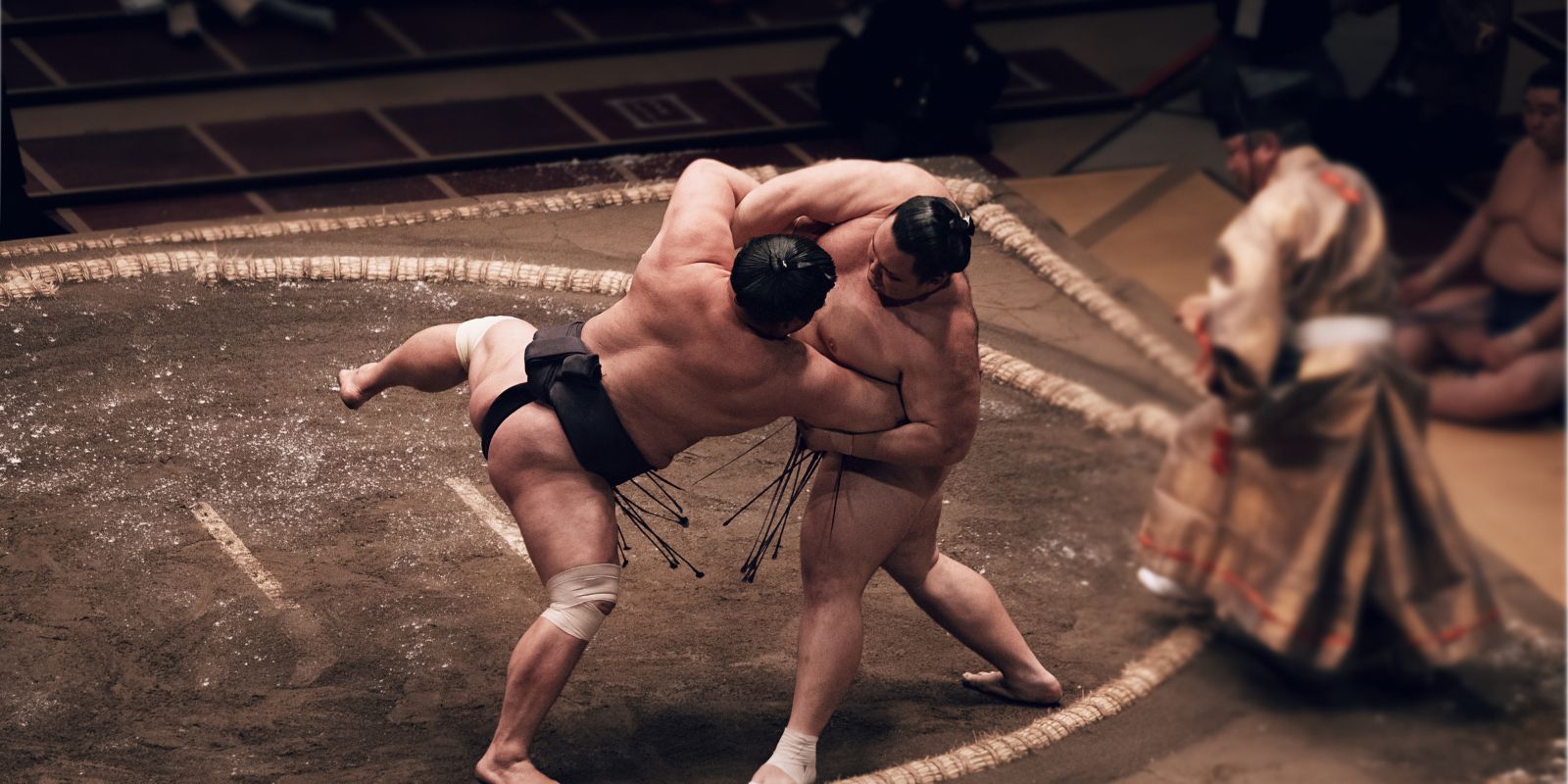
Sumo comes from the Japanese word ‘compete’ or ‘fight’ and is a full-contact wrestling sport. During a bout the rikishi (wrestler) attempts to force their opponent out of the dohyo (the raised clay ring) or to get them to touch the ground with any body part other than the soles of the feet. This is done through throwing, shoving and pushing. While the wrestling itself can be over in seconds (longer bouts can last up to four minutes), it is a sport that preserves many ancient traditions and includes elements from the Shinto religion, so it is the elaborate rituals and posturing beforehand that makes sumo so fascinating.
Sumo’s roots can be traced back to the 8th century, from ancient Shinto agricultural rituals that were used to pray for a good harvest or to repel evil spirits. It took its present form during the Edo Period (1603 – 1867); prior to this point sumo was an unregulated, violent spectacle so authorities only allowed it during charity events at Shinto shrines. It was at this point that the standardised rules were established, most of which are still in place today, and the ranking system was introduced, allowing one rikishi to be designated Yokozuna (Grand Champion) every year.
While there are plenty of female sumo wrestlers at amateur level in Japan, women are strictly forbidden from stepping into the dohyo due to Shinto religious beliefs and so can’t compete at a professional level.
Rikishi Life
Wrestler life is very regimented and dictated by strict tradition. They must live in a sumo training stable where they also train and eat a special high-calorie stew called chanko nabe, which is packed with meat, tofu and vegetables – eating a huge amount to gain and maintain weight is essential. Wrestlers must also dress traditionally in a yukata (cotton robe) when out in public and have their hair in a chonmage (top knot), add in their immense size and they are easy to spot on trains and buses, as they are also not allowed to drive!
Every wrestler must be well-versed in the rites and ritual of the sport. Watching a tournament, you’ll notice traditions like the wrestling ring being blessed by a priest, who buries purifying items and good luck charms at its centre. The wrestlers will also throw handfuls of salt into to ring to purify it and drive away bad spirits, and do the famous foot stamping, also to keep evil spirits at bay. Before the bout begins, the wrestlers have four minutes to intimidate their opponent, using psychological and physical tactics to project power, this mostly achieved through fierce stare downs, with each wrestler squatting and glaring, taking deep breaths and slapping their chests. This builds an explosive tension before the physical clash begins.
Honbasho
The six official sumo tournaments, called honbasho, take place in Tokyo (January, May and September), Osaka (March), Nagoya (July) and Fukuoka (November). Each lasts 15 days, with wrestlers fighting once a day to earn wins and improve their ranking on the banzuke (official ranking sheet).
Seeing Sumo With Wendy Wu Tours
Wendy Wu Tours include a thrilling afternoon visit to a sumo tournament on many of our tours. When there is a tournament taking place while your group is in town - we include tickets.
Check out the board below for departures that include seeing sumo or look out for the sumo departures in the price boxes of each tour listed below.
 United Kingdom
 Australia
 New Zealand
 Ireland
 United States
  Canada
 Cyprus
 Greece
 Belgium
 South Africa
 Norway